

What Does a Commercial Glazing Contractor Do?
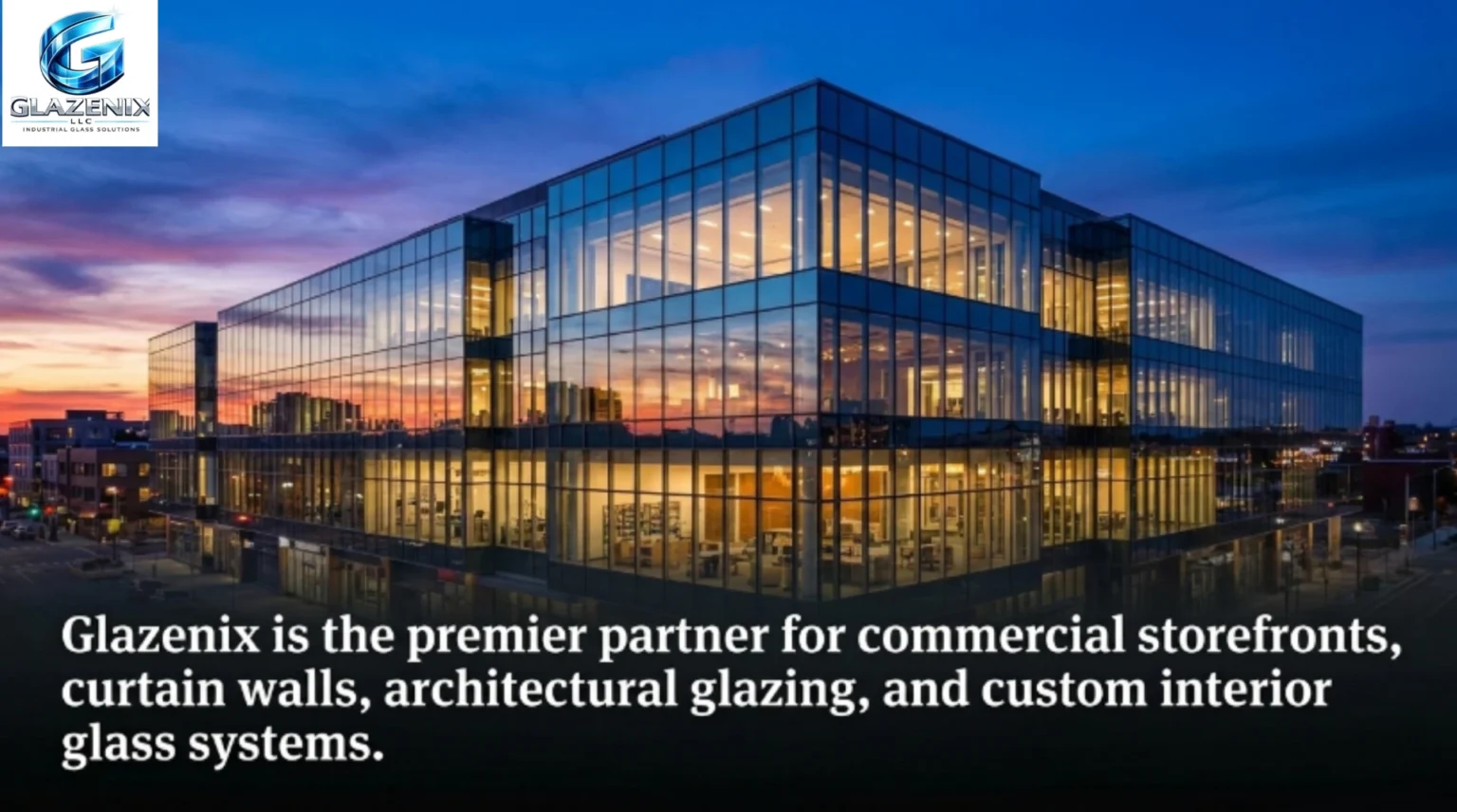
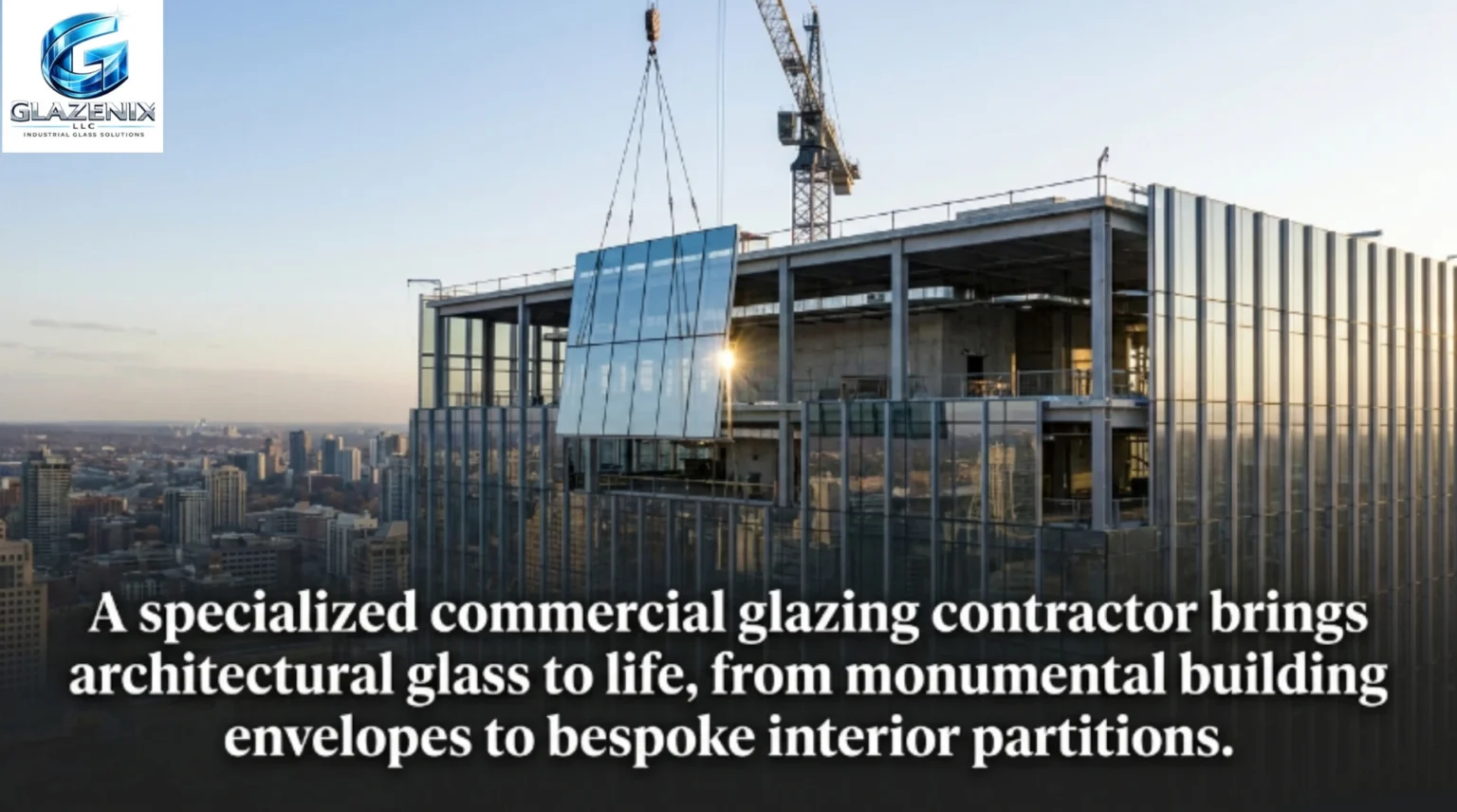
A commercial glazing contractor specializes in the installation, replacement, repair, and coordination of glass and glazing systems used in commercial buildings. From storefronts and curtain walls to interior partitions and commercial windows, glazing contractors help bring architectural glass systems from design to finished installation.
When a commercial building requires glass, aluminum framing, storefront systems, curtain walls, glass doors, or interior glazing, a specialized commercial glazing contractor or a professional glazing company coordinates the work needed to turn architectural plans into functional glass installations.
Commercial glazing is more than simply installing glass. It can involve reviewing project drawings, coordinating dimensions, selecting appropriate systems, preparing openings, installing framing, setting glass, sealing assemblies, and coordinating with other construction trades.
Table of Contents
ToggleWhat Does a Commercial Glazing Contractor Handle?
The exact scope varies by project, but commercial glazing contractors commonly work with the following systems and applications:
Exterior Glazing
Storefront systems, curtain walls, commercial windows, exterior glass, aluminum framing, and other building-envelope applications.
Interior Glazing
Glass partitions, office fronts, interior doors, conference rooms, decorative glazing, and other architectural interior applications.
Repair & Replacement
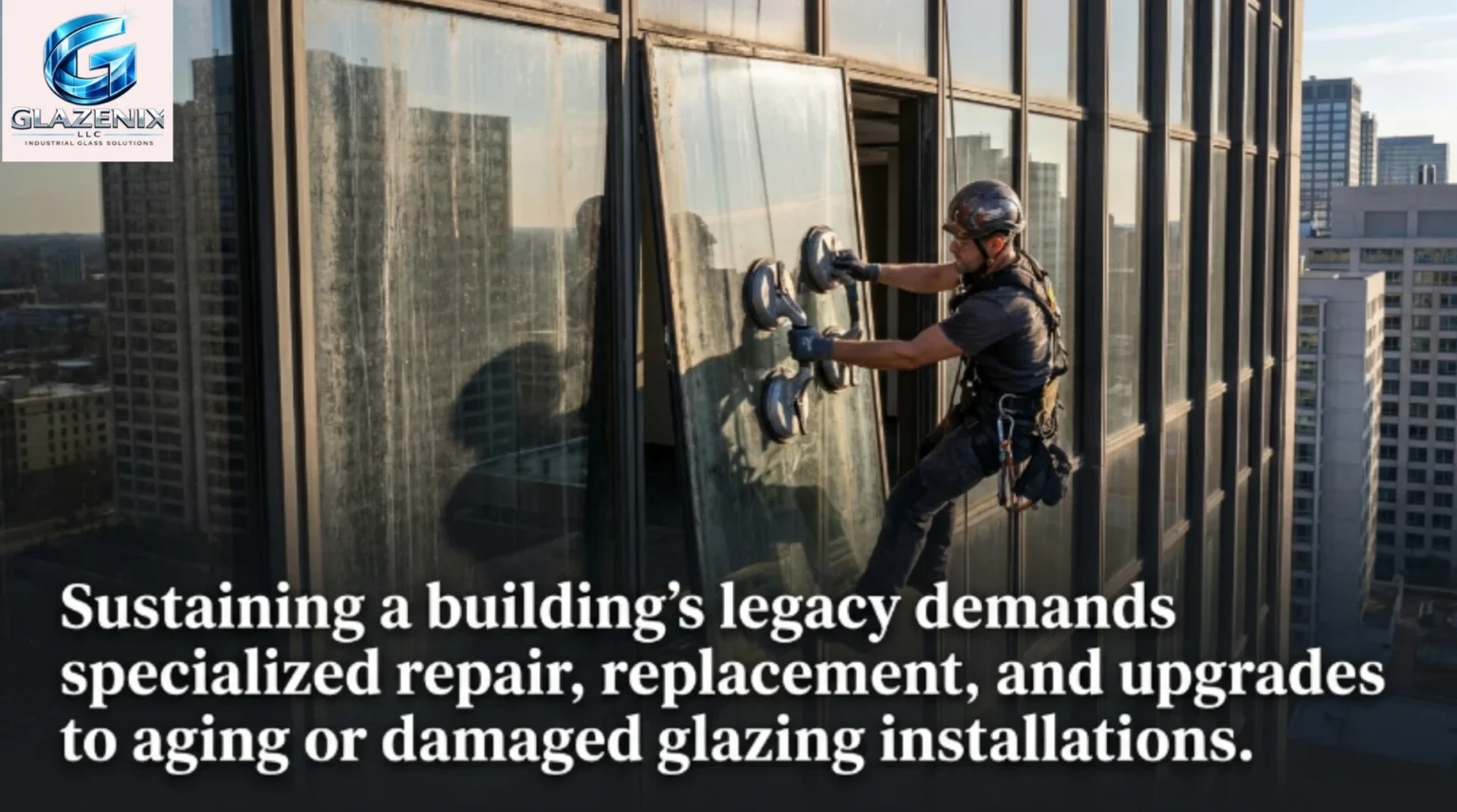
Replacement of damaged glass, repair of commercial glass systems, and upgrades to existing glazing installations.
What Is Commercial Glazing?
Commercial glazing refers to the glass and framing systems used in commercial, institutional, retail, industrial, and multifamily buildings. These systems can serve structural, weather-resistance, daylighting, security, privacy, aesthetic, and functional purposes.
Depending on the building, glazing may include everything from a small storefront entrance to a large curtain wall system spanning multiple floors. Interior applications can include glass office partitions, doors, conference rooms, and other architectural glass elements.
What Is a Glazing Contractor?
A glass and glazing contractor is a construction professional who specializes in the installation, replacement, repair, and coordination of glass and glazing systems in buildings. Glazing contractors work with both the glass itself and the framing, hardware, seals, and other components required to create a complete glazing system.
Depending on the project, a glazing contractor may install commercial storefront windows , curtain wall systems , commercial windows , glass doors , glass partitions , architectural glazing , and other glass applications. They may also handle the replacement or repair of existing glass and glazing systems.
Glazing contractors can be involved in both new construction and renovation projects. They often work from architectural drawings and project specifications, take or verify field measurements, coordinate materials and dimensions, install glazing systems, and coordinate their work with general contractors, architects, builders, developers, and other trades.
Commercial Glass & Glazing Drawings
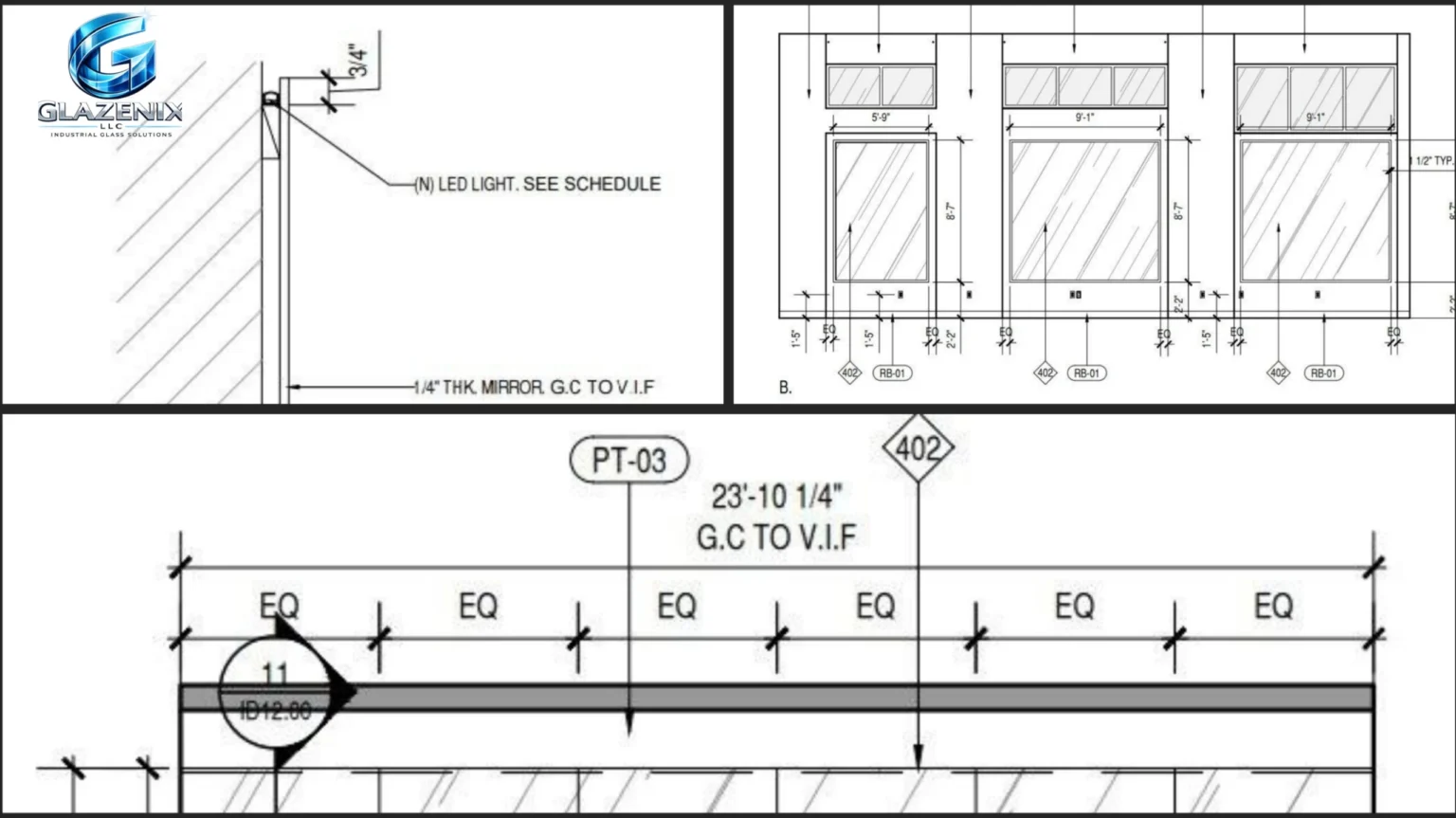
Commercial glass and glazing drawings are technical drawings used to communicate the design, dimensions, materials, and installation details of a building's glass and glazing systems. They help glazing contractors, architects, general contractors, and other project teams understand exactly how the glazing work should be fabricated and installed.
Depending on the project, commercial glazing drawings may include details for storefront systems, curtain wall systems, commercial windows, glass doors, aluminum framing, glass partitions, and other architectural glazing applications.
What Is Included in Commercial Glass & Glazing Drawings?
Glazing drawings can contain a range of technical information, including:
Glass Types & Specifications
Glass types, thicknesses, configurations, and other applicable glass specifications.
Aluminum Framing
Aluminum framing profiles, dimensions, finishes, and framing configurations.
Storefront & Curtain Wall Elevations
Storefront and curtain wall elevations, door and window locations, panel sizes, and opening dimensions.
Mullions & Framing
Mullion and framing configurations used to organize and support the glazing system.
Connections & Anchoring
Glass-to-frame and frame-to-building connections, anchoring, and attachment details.
Sealants & Gaskets
Sealants, gaskets, and other glazing components required for the system.
Doors & Hardware
Hardware, door configurations, entrance details, and related glazing components.
Section Details
Head, sill, jamb, and other section details used to clarify construction and installation conditions.
Why Are Glazing Drawings Important?
Accurate commercial glass and glazing drawings help reduce dimensional errors, material conflicts, installation problems, and delays during construction. They also provide a common technical reference for the architect, glazing contractor, general contractor, and other trades working on the project.
For complex commercial projects, detailed glazing drawings can be particularly important when coordinating curtain wall systems, storefront glass, custom aluminum framing, large glass openings, and architectural glazing.
At Glazenix LLC, we coordinate commercial glass and glazing work with the requirements of each project, helping ensure that the selected glazing systems align with the architectural design, project specifications, and installation requirements.
What Does a Commercial Glazing Contractor Actually Do?
A commercial glazing contractor's responsibilities can begin well before glass arrives on the jobsite. Depending on the project, the contractor may participate in planning, measurements, material coordination, installation, inspection, repair, and replacement.
Reviewing Project Requirements
Commercial glazing work often starts with understanding the building plans, architectural details, opening dimensions, specifications, and project scope. The glazing contractor needs to understand what systems are required and how they interact with the surrounding construction.
For larger projects, coordination with architects, general contractors, construction managers, and other trades can be an important part of the process.
Measuring and Assessing Openings
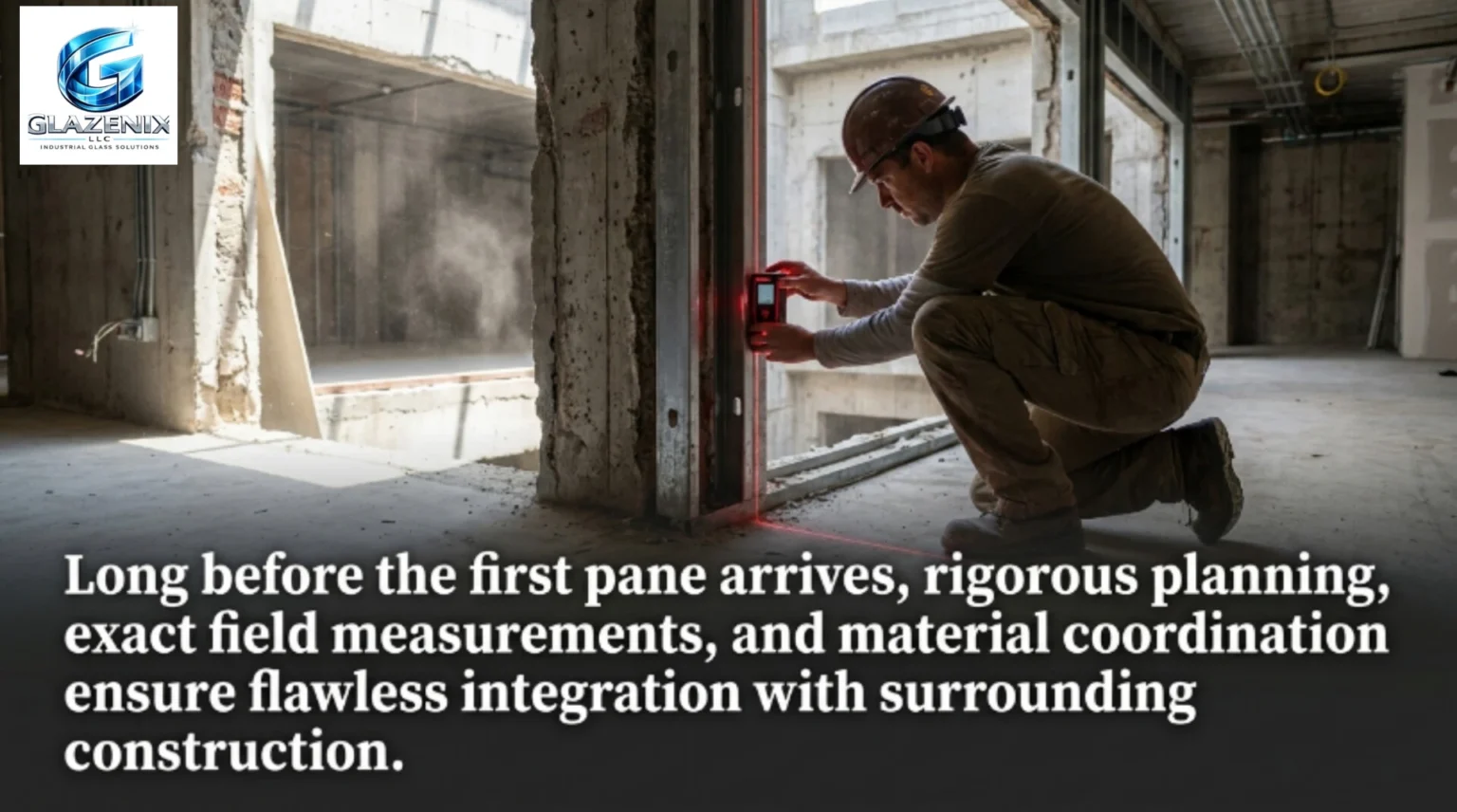
Accurate dimensions are essential for commercial glass installation. Contractors may assess existing openings, verify measurements, identify installation conditions, and determine what materials and framing systems are required.
This becomes especially important when replacing existing glass or renovating an occupied commercial property.
Installing Commercial Storefront Systems
Storefront glazing is one of the most recognizable commercial glazing applications. It is commonly used for retail stores, restaurants, offices, service businesses, and other commercial spaces.
Learn more about commercial storefront systems and how they can be used for commercial entrances and exterior glazing.
Installing Curtain Wall Systems
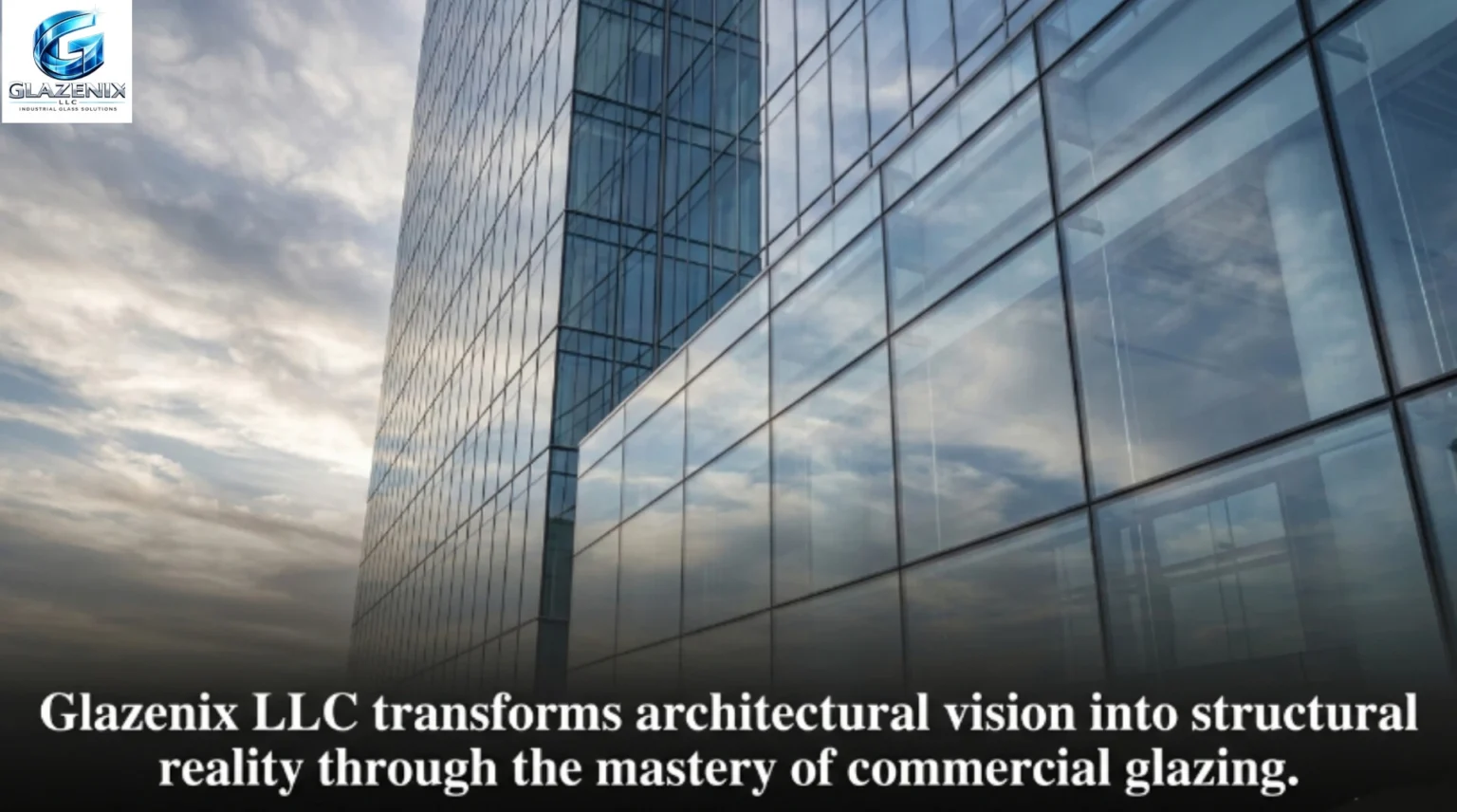
Curtain wall systems are commonly used on larger commercial buildings where extensive exterior glazing is required. These systems combine glass and framing to create large exterior building elevations.
Glazenix provides curtain wall systems for commercial construction and architectural applications.
Architectural Glazing
Architectural glazing can involve custom and visually prominent glass applications where appearance, transparency, framing, and design integration are important considerations.
Explore architectural glazing services for commercial and architectural projects.
Installing Commercial Windows and Glass Doors
Commercial buildings can require a wide range of window and door systems. Depending on the application, glazing contractors may install exterior commercial windows, entrance systems, glass doors, and related framing.
See Glazenix's commercial windows and commercial glass doors services.
Interior Glass Partitions
Commercial glazing is not limited to building exteriors. Interior glass partitions can divide offices, conference rooms, reception areas, and other commercial spaces while maintaining visual openness.
Glazenix offers commercial glass partitions and office glass partition systems for interior commercial applications.
Aluminum Framing and Glazing Systems
Many commercial glass installations depend on aluminum framing to support and organize glass panels. Framing systems can be integrated with storefronts, windows, partitions, doors, and other commercial glazing applications.
Learn more about aluminum framing for glass and commercial glazing systems.
Commercial Glass Repair and Replacement
Existing commercial buildings may need glazing services because of accidental damage, aging systems, renovation, operational changes, or failed glass.
A commercial glazing contractor can assess the existing condition and determine whether repair or replacement is appropriate.
Visit the commercial glass repair page for more information.
Glass Railings and Architectural Features
Commercial glazing contractors may also install architectural glass features such as glass railings and other applications where transparent or framed glass forms part of the building design.
See commercial glass railings for more information about these applications.
Commercial Glazing During New Construction
In a new commercial construction project, glazing is typically coordinated with multiple phases of the building process. The timing of glass and framing installation can depend on the surrounding structure, weather conditions, interior work, and other trades.
Project Planning
Review architectural drawings, glazing requirements, dimensions, materials, and project coordination requirements.
Field Measurements
Verify site conditions and dimensions before fabrication and installation.
Material Coordination
Coordinate glass, framing, doors, hardware, and other required glazing components.
Installation
Install the specified glazing systems and coordinate the work with the surrounding construction.
Final Inspection
Review completed installations and address applicable adjustments, replacement needs, or finishing requirements.
Commercial Glazing for Renovations and Tenant Improvements
Commercial glazing is also an important part of renovation and tenant improvement projects. Existing spaces may need new storefronts, office partitions, doors, windows, or other glass systems to accommodate a new layout or updated design.
Renovation projects can require additional coordination because glazing contractors are often working around existing structures, occupied spaces, finished interiors, and other active trades.
Who Hires a Commercial Glazing Contractor?
Commercial glazing contractors work with different stakeholders depending on the type and stage of the project. General contractors, commercial developers, property owners, architects, builders, and tenant improvement teams may all require specialized commercial glass and glazing support.
General Contractors
General contractors coordinate glazing work as part of a larger commercial construction project, including new construction, renovation, and tenant improvement projects.
See commercial glass for contractors and commercial renovation for related project applications.
Architects
Architects coordinate architectural glass and glazing requirements with the building design, project specifications, and construction requirements.
Learn more about commercial glass for architects and architectural glazing .
Commercial Developers
Commercial developers incorporate glazing systems into new developments and large-scale construction projects, coordinating glass and glazing with architectural plans, schedules, and other project requirements.
See commercial glass for developers and commercial glass applications for related project types.
Builders
Builders coordinate glass, framing, windows, doors, storefronts, curtain walls, and other glazing components during commercial construction.
Explore commercial glass for builders and commercial storefronts for related applications.
Property Owners
Property owners may arrange repairs, replacements, renovations, storefront upgrades, window improvements, and other glazing upgrades for existing commercial properties.
See commercial glass for property owners and commercial glass repair for existing-property needs.
Tenant Improvement Contractors
Tenant improvement contractors integrate interior and exterior glazing into commercial tenant build-outs and renovations, including storefronts, office glass, partitions, entrances, windows, and other glazing systems.
Relevant resources include commercial renovation and glass for office and commercial buildings .
Commercial Glazing Applications at a Glance
| Glazing Application | Common Commercial Use | Typical Project Context |
|---|---|---|
| Storefront Systems | Retail entrances, restaurants, offices | New construction and renovation |
| Curtain Walls | Large exterior building elevations | Commercial construction |
| Commercial Windows | Offices, multifamily, institutional buildings | Construction and replacement |
| Glass Doors | Entrances, offices, retail spaces | New construction and tenant improvements |
| Glass Partitions | Offices and interior commercial spaces | Tenant improvements and renovations |
| Glass Railings | Stairs, balconies, commercial architectural features | New construction and architectural upgrades |
| Commercial Glass Repair | Damaged or aging glazing systems | Existing properties and maintenance |
Why Is a Commercial Glazing Contractor Important?
Glass systems are closely connected to the building's architecture, entrances, exterior envelope, interior layout, and overall appearance. Proper coordination can therefore be important to the success of a commercial project.
A specialized glazing contractor brings experience with the installation and coordination of commercial glass systems rather than treating glazing as a simple material installation.
Project Coordination
Helps integrate glazing work with the architectural plans and surrounding construction.
System Knowledge
Provides familiarity with commercial storefronts, curtain walls, framing, doors, windows, and interior glazing.
Installation Experience
Applies specialized installation practices to commercial glass and glazing systems.
What Should You Look for in a Commercial Glazing Contractor?
When selecting a glazing contractor, the appropriate criteria depend on the project's size, complexity, location, specifications, and scope. Useful areas to evaluate include:
Relevant commercial experience: Look for experience with the type of building and glazing system involved.
Scope of services: Determine whether the contractor can handle the specific systems required, such as storefronts, curtain walls, windows, doors, or interior glazing.
Project coordination: Commercial projects often involve multiple parties, so clear communication and coordination are important.
Repair and replacement capabilities: For existing buildings, determine whether the contractor can also address damaged or aging glass systems.
Relevant portfolio: Review completed commercial projects that are comparable to the work you need.
Commercial Glazing Services from Glazenix
Glazenix provides commercial glass and glazing services for a range of construction, renovation, and architectural applications.
Commercial Storefronts
Glass storefront systems for retail, office, restaurant, and other commercial spaces.
Curtain Wall Systems
Large-scale exterior glazing systems for commercial buildings.
Architectural Glazing
Architectural glass applications integrated into commercial building design.
Commercial Windows
Commercial window systems for new construction, renovation, and replacement.
Glass Partitions
Interior glass systems for offices and commercial environments.
Commercial Glass Repair
Repair and replacement solutions for existing commercial glazing systems.
Frequently Asked Questions
What is a commercial glazing contractor?
A commercial glazing contractor specializes in the installation, replacement, repair, and coordination of glass and glazing systems used in commercial buildings.
What does commercial glazing include?
Commercial glazing can include storefronts, curtain walls, commercial windows, glass doors, aluminum framing, interior partitions, architectural glazing, glass railings, and commercial glass repair or replacement.
Do commercial glazing contractors work with general contractors?
Yes. Commercial glazing contractors commonly coordinate with general contractors, architects, developers, builders, construction managers, and tenant improvement contractors.
Can a commercial glazing contractor replace existing glass?
Yes. Commercial glazing contractors may provide glass replacement and repair services for existing buildings, depending on the glazing system and project requirements.
Is commercial glazing used only on the exterior of a building?
No. Commercial glazing also includes interior applications such as glass partitions, office fronts, interior doors, conference rooms, and other architectural glass installations.
What types of businesses use commercial glazing?
Commercial glazing can be used in retail stores, offices, restaurants, hotels, healthcare facilities, financial buildings, multifamily properties, industrial facilities, mixed-use developments, and many other commercial projects.
Need Commercial Glass or Glazing Services?
Whether you are planning a new commercial building, renovating an existing property, completing a tenant improvement, or replacing damaged glazing, Glazenix can help with commercial glass and glazing applications.
Contact Us