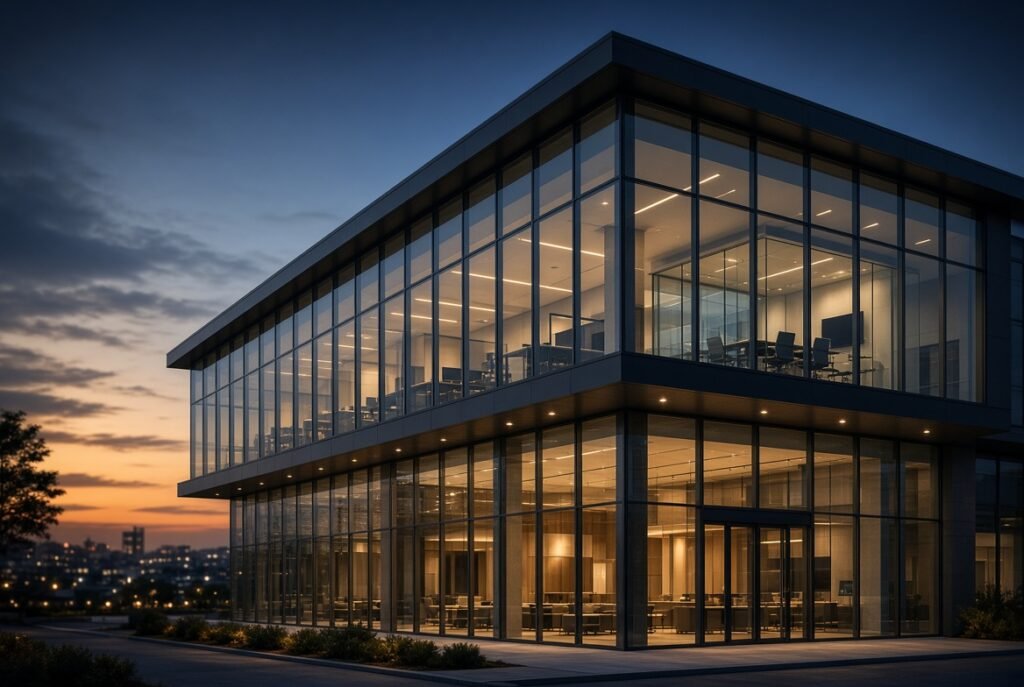
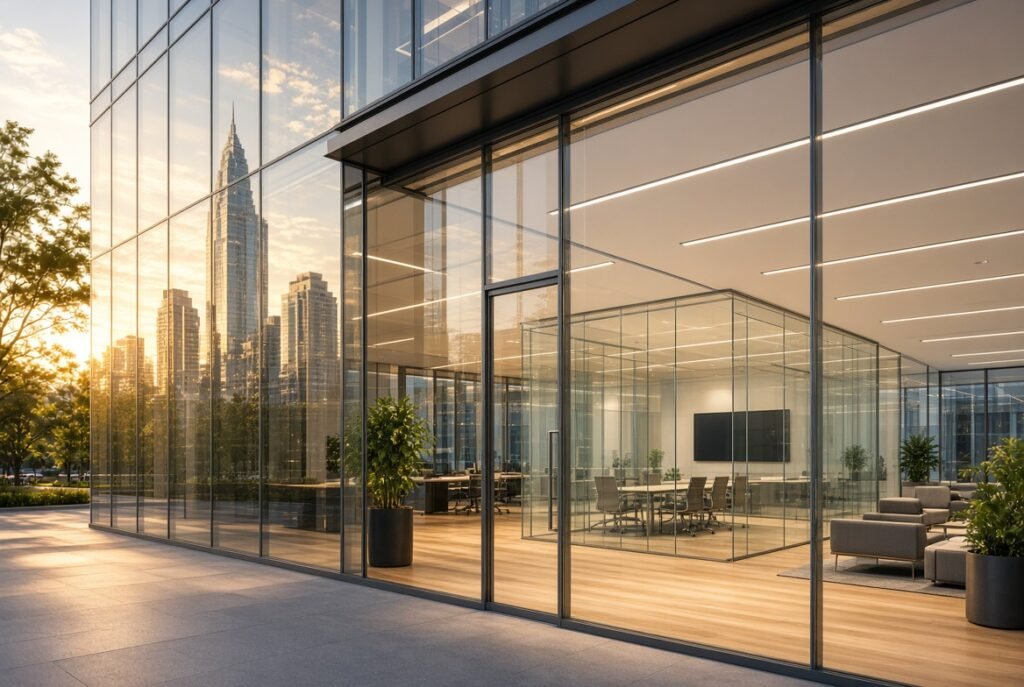
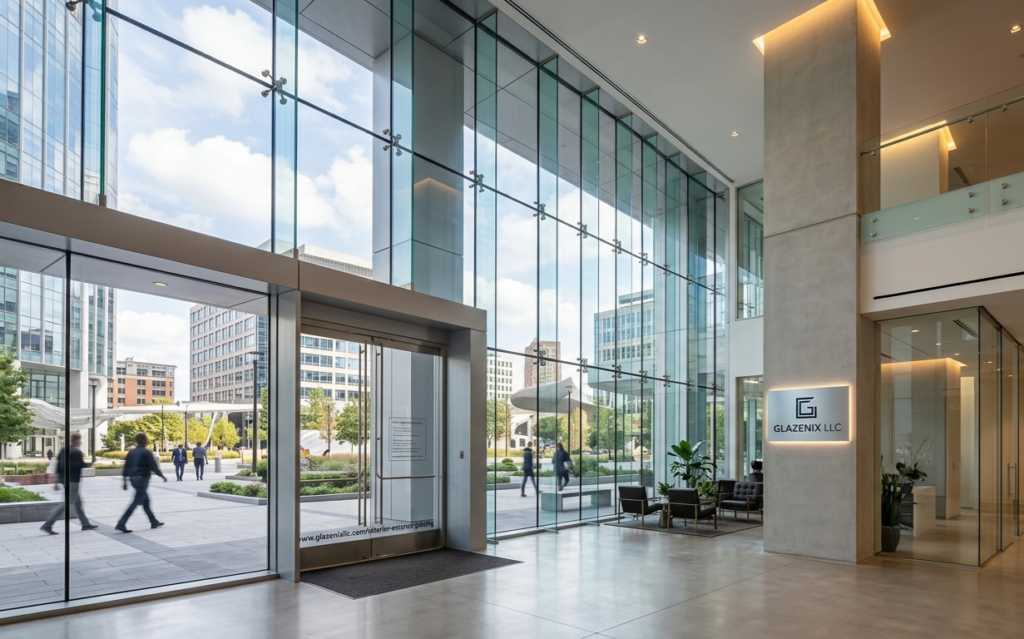
Architectural Glass Solutions Designed for Modern Buildings
Glass is more than a functional building material. It can define the character of a space, bring natural light into interiors, create a modern architectural appearance, and improve the performance of a building envelope. At GlazenixLLC, we provide professional interior and exterior glazing services for commercial buildings, offices, retail spaces, renovations, and architectural projects. Our glazing solutions combine glass, framing systems, hardware, and installation expertise to create clean, durable, and visually appealing results.
Whether you need exterior glazing for a commercial building or interior glass features for an office or retail environment, our team can help you select and install a solution suited to your project’s requirements.
Need glazing for your project? Get in touch with Glazenix LLC for a consultation and a project estimate.
What Is Interior & Exterior Glazing?
Glazing refers to the installation of glass into a building’s windows, doors, façades, partitions, storefronts, and other architectural systems. Glazing can generally be divided into two major applications:
Exterior Glazing
Exterior glazing forms part of the building’s exterior envelope. It can include systems such as:
- Commercial storefront glass
- Curtain wall glazing
- Exterior glass doors
- Aluminum-framed glazing systems
- Commercial windows
- Architectural façades
- Insulated glass units
- Replacement and retrofit glazing
- Glass entrances and building openings
Exterior glazing needs to balance appearance, weather resistance, energy performance, structural requirements, and durability.
Interior Glazing
Interior glazing is used within a building to create functional and visually open spaces. Common applications include:
- Office glass partitions
- Interior glass walls
- Glass conference rooms
- Glass doors
- Interior storefront systems
- Reception areas
- Retail displays
- Glass railings and barriers
- Decorative and architectural glass
Interior glazing can help create brighter, more connected spaces while maintaining separation between rooms and work areas.
Exterior Glazing for Commercial Buildings
The exterior of a building is constantly exposed to weather, temperature changes, wind, and other environmental conditions. Properly designed and installed glazing therefore plays an important role in the building envelope. Glazenix provides exterior glazing solutions for new construction, commercial renovations, building upgrades, and replacement projects.
Commercial Storefront Glazing
Storefront glazing creates the visual connection between a commercial property and its customers. Glass storefronts can provide expansive views, natural light, and a contemporary appearance while supporting the functional requirements of retail and commercial spaces.
Curtain Wall Glazing
Curtain wall systems allow architects and developers to incorporate large areas of glass into commercial façades. They can create a modern building appearance while forming an important component of the exterior envelope.
Commercial Windows
Commercial window glazing can improve the appearance and functionality of an existing building. Depending on the project, replacement glazing may help address outdated, damaged, inefficient, or deteriorated windows.
Glass Entrances & Doors
Glass entrances make commercial buildings more welcoming and accessible. Frameless and aluminum-framed systems can be designed to complement the architectural style of the property.
Interior Glazing for Offices & Commercial Spaces
Interior glass can transform the way people experience a commercial building. Instead of dividing a space with solid walls, architectural glass allows businesses to create separation while maintaining visual connection and access to natural light.
Office Glass Partitions
Glass partitions are a popular choice for modern offices because they create defined workspaces without making the interior feel closed or confined. They can be used for:
- Private offices
- Meeting rooms
- Conference rooms
- Executive offices
- Collaborative workspaces
- Reception areas
- Training rooms
Depending on the design, partitions can use framed or frameless systems and clear, tinted, frosted, or decorative glass.
Glass Conference Rooms
A glass conference room provides privacy and separation while maintaining a sense of openness throughout an office. Glass conference rooms can be customized according to the project’s architectural and functional requirements, including different framing configurations, door systems, and privacy options.
Interior Glass Doors
Glass doors provide a clean transition between spaces and can complement both contemporary and traditional commercial interiors. They may be used throughout:
- Offices
- Hotels
- Retail stores
- Restaurants
- Medical facilities
- Commercial buildings
Interior vs. Exterior Glazing
Although both applications use architectural glass, interior and exterior glazing have different performance requirements.
| Feature | Interior Glazing | Exterior Glazing |
| Primary purpose | Space division & design | Building envelope & exterior appearance |
| Common applications | Partitions, offices, doors | Storefronts, curtain walls, windows |
| Weather exposure | Minimal | High |
| Thermal performance | Project dependent | Often critical |
| Design considerations | Privacy, acoustics, aesthetics | Weather, energy, structure, aesthetics |
| Typical framing | Aluminum, frameless, specialty systems | Aluminum storefront, curtain wall |
| Common glass | Clear, frosted, laminated, decorative | Insulated, laminated, tempered, low-E |
The appropriate glazing system depends on the building, location, application, design requirements, and applicable building codes.
Glazing Systems for Different Commercial Projects
Every commercial project has different requirements. Glazenix works with property owners, developers, contractors, architects, and other project stakeholders to provide glazing solutions appropriate for the application.
Offices: Create modern work environments with glass partitions, conference rooms, doors, and exterior glazing systems.
Retail & Storefronts: Use large glass areas to increase visibility, showcase merchandise, and create inviting entrances.
Restaurants & Cafés: Architectural glass can help restaurants create bright, contemporary environments while connecting interior spaces with the surrounding area.
Hotels: Glass can be incorporated into entrances, lobby areas, partitions, windows, and other architectural features.
Healthcare & Professional Facilities: Glazing can provide functional separation, visibility, natural light, and a professional appearance when properly designed for the application.
Commercial Renovations: Existing buildings can benefit from glazing upgrades that modernize outdated façades, entrances, windows, and interior spaces.
Glass & Framing Options
A successful glazing installation involves more than selecting the glass itself. The relationship between the glass, framing, hardware, seals, and supporting systems is critical to the finished installation. Depending on the application, glazing projects may incorporate:
Tempered Glass
Tempered glass is heat-treated to increase its strength and provide a safety-oriented glazing option for many architectural applications.
Laminated Glass
Laminated glass consists of glass layers bonded with an interlayer. It can be used where safety, security, acoustic performance, or other specialized properties are important.
Insulated Glass
Insulating glass units contain multiple panes separated by a sealed space. They are commonly used in exterior applications where thermal performance is an important consideration.
Low-E Glass
Low-emissivity coatings can help manage solar heat and thermal transfer, making Low-E glass a common consideration for energy-conscious exterior glazing projects.
Aluminum Framing
Aluminum framing provides a durable and versatile framework for many commercial glazing applications, including storefronts, windows, entrances, and other architectural systems.
Benefits of Professional Glazing
Choosing the appropriate glazing system can contribute to both the performance and appearance of a building.
1- Improved Natural Light: Large glass surfaces can increase daylight penetration and create brighter commercial interiors.
2- Modern Architectural Design: Glass provides a clean, contemporary aesthetic that works across a wide range of architectural styles.
3- Better Visual Connectivity: Interior glass can connect different areas of a building while still providing functional separation.
4- Enhanced Commercial Appearance: Well-designed storefronts, entrances, façades, and interior glass systems can significantly influence how customers, employees, and visitors perceive a property.
5- Flexible Design: Glass can be customized through different sizes, configurations, framing systems, finishes, and privacy options.
6- Building Performance: For exterior applications, selecting the appropriate glass and glazing system can help address thermal, solar, acoustic, and weather-related performance requirements.
Glazing for New Construction & Renovation Projects
Glazing requirements should ideally be considered early in the construction process. For new commercial construction, glazing needs to coordinate with architectural drawings, structural requirements, building-envelope considerations, framing systems, doors, and other trades. For commercial renovations, the process may involve evaluating existing glass and framing, determining whether components can be repaired or reused, and identifying opportunities for replacement or upgrades.
Glazenix can support glazing projects from planning and material selection through installation, helping project teams coordinate the glazing scope with the overall construction schedule.
Our Glazing Process
We take a project-focused approach to commercial glazing.
1- Project Consultation
We begin by understanding the building, application, design objectives, and project requirements.
2- Glazing & System Selection
We help identify appropriate glass, framing, and glazing systems based on the intended application.
3- Project Coordination
For commercial projects, glazing must coordinate with other construction activities. We work with relevant project stakeholders to help keep the glazing scope aligned with the project.
4- Professional Installation
Our team installs the specified glazing systems with attention to fit, alignment, finish, and functionality.
5- Final Inspection
We review the completed installation to ensure the glazing system meets the project’s specified requirements and provides the intended finished appearance.
Why Choose GlazenixLLC?
Commercial glazing requires attention to both architectural design and construction requirements. GlazenixLLC provides glazing solutions with a focus on:
- Commercial glazing expertise
- Interior and exterior applications
- Quality glass and framing systems
- Project-specific solutions
- Commercial construction coordination
- New construction and renovation support
- Professional installation
- Clean architectural finishes
Whether you’re developing a new commercial building, renovating an existing property, or upgrading an office interior, we can help you determine the right glazing approach for your project.
Frequently Asked Questions
What is the difference between interior and exterior glazing?
Interior glazing is primarily used to divide and enhance spaces inside a building, such as offices, conference rooms, and reception areas. Exterior glazing forms part of the building’s exterior envelope and includes systems such as storefronts, curtain walls, windows, and exterior doors.
What types of buildings can use commercial glazing?
Commercial glazing can be used in offices, retail stores, restaurants, hotels, healthcare facilities, professional buildings, mixed-use developments, and many other commercial properties.
Can glazing be used for commercial renovations?
Yes. Glazing is commonly incorporated into commercial renovation projects to replace outdated windows, upgrade storefronts, modernize entrances, improve interiors, or update the appearance of a building.
Can interior glass partitions provide privacy?
Yes. Privacy can be addressed through the selection of glass and design configuration. Options can include frosted, patterned, tinted, laminated, or other privacy-oriented glass solutions.
Is aluminum framing suitable for commercial glazing?
Aluminum is widely used in commercial glazing because it provides a durable, versatile framing solution that can accommodate many storefront, window, door, and architectural glazing configurations.
How do I choose the right glazing system?
The right system depends on factors including the location of the glass, building design, dimensions, structural requirements, thermal and acoustic considerations, safety requirements, aesthetics, budget, and applicable codes. A glazing professional can help determine the appropriate configuration.
Get Started With Your Glazing Project
From commercial storefronts and curtain walls to office partitions and architectural glass, GlazenixLLC provides interior and exterior glazing solutions designed around the needs of your project. Whether you’re an architect, contractor, property developer, property owner, or business owner, our team can help you plan the glazing scope and identify a practical solution for your building.
Ready to discuss your project?
Request an Estimate or Contact GlazenixLLC